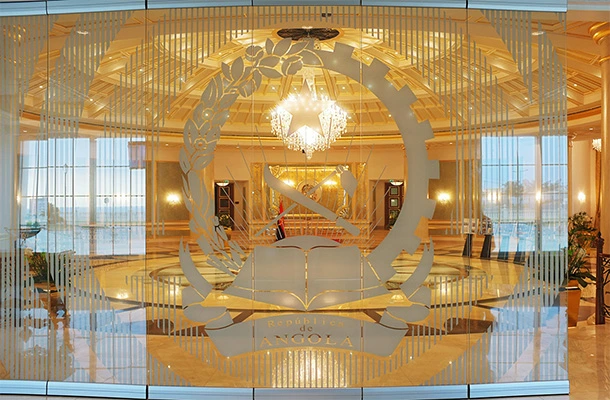
The National Assembly of Angola in Luanda is the most significant architectural complex built in the country since independence in 1974. With an area of approximately 30,000 square metres and crowned by a 57-metre-high dome, the building has a monumental presence and has become a landmark not only for the southern coast but for the entire African continent.
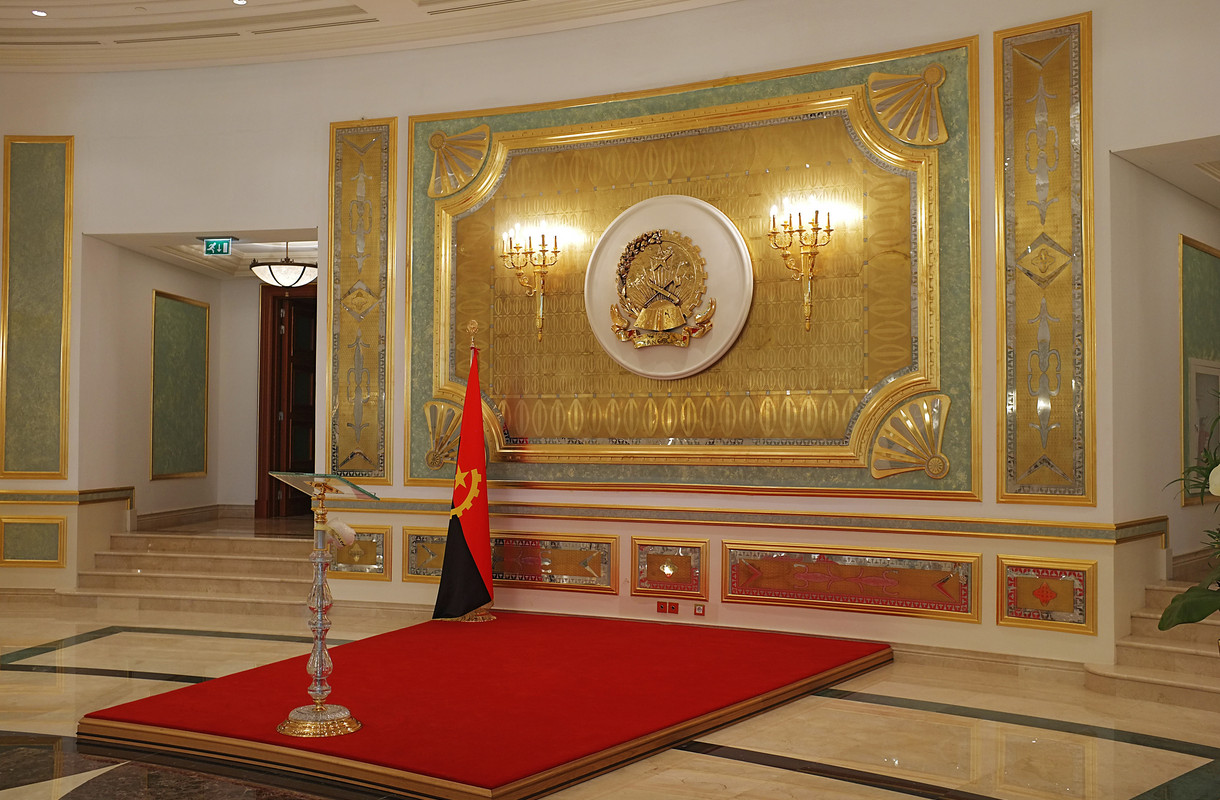
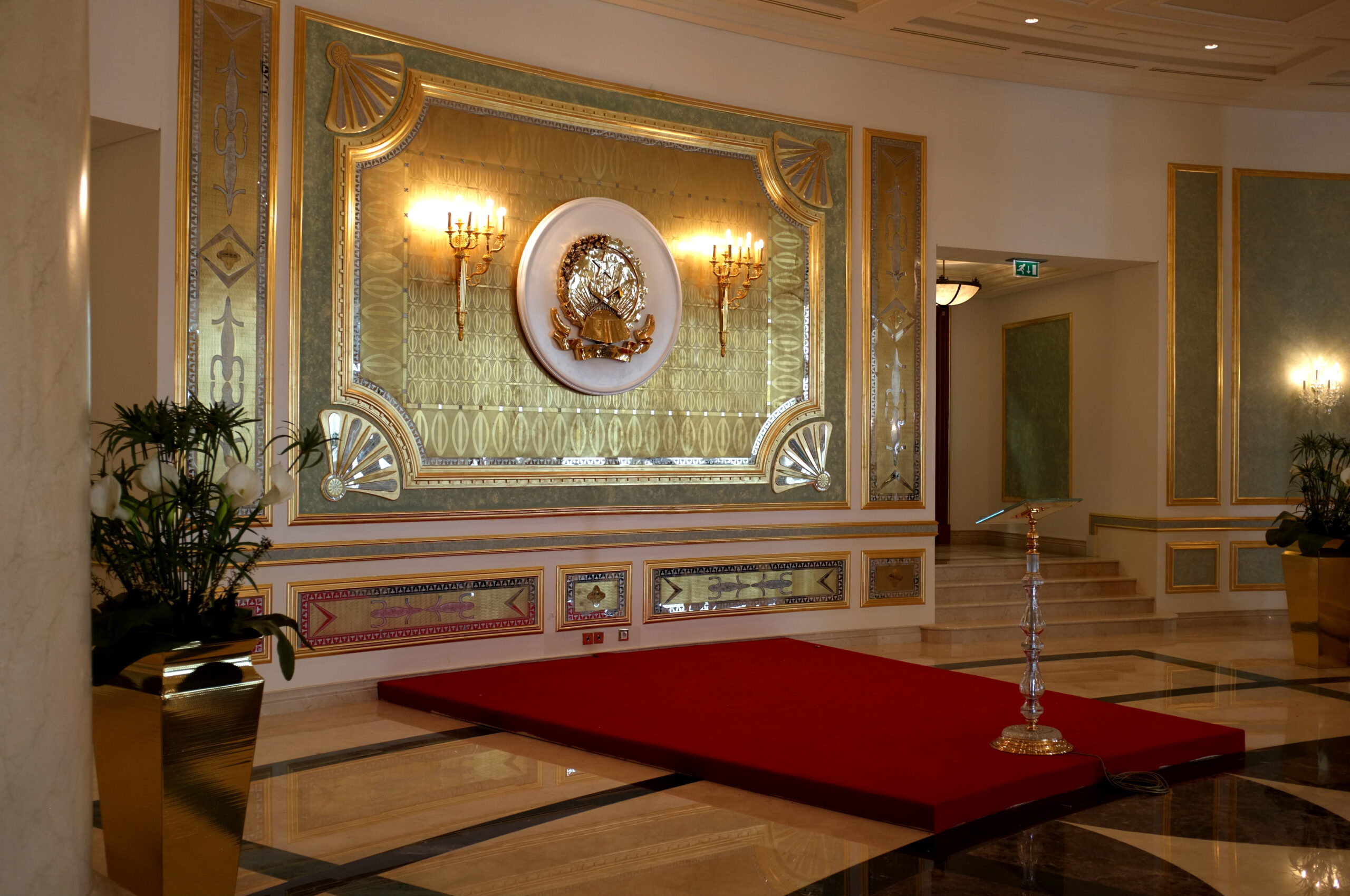
Angolan artistic heritage provided a fundamental source of inspiration: traditional motifs were interpreted and transformed by skilled craftsmen into decorative elements integrated into the furnishings and architectural details.
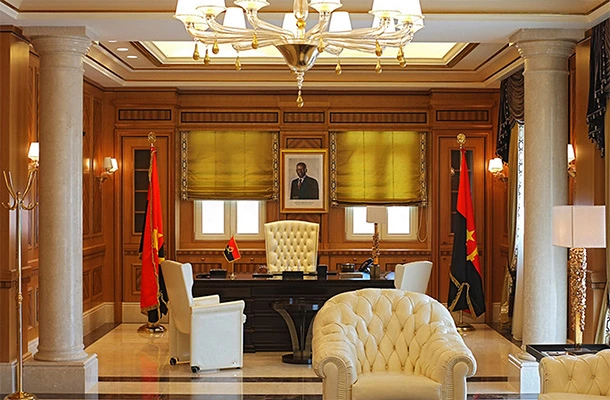
Particular attention was paid to the conference room, where G. Moscatelli was responsible for the design and construction of the flagpole structures and wall sconces, contributing refined lighting and symbolic elements to the space.